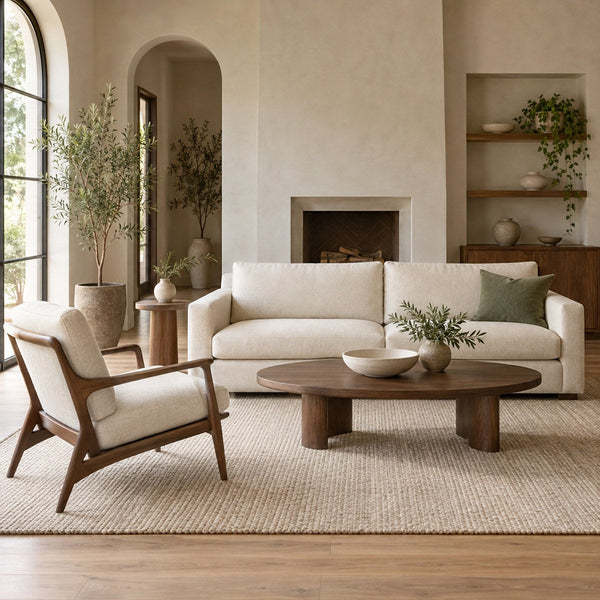
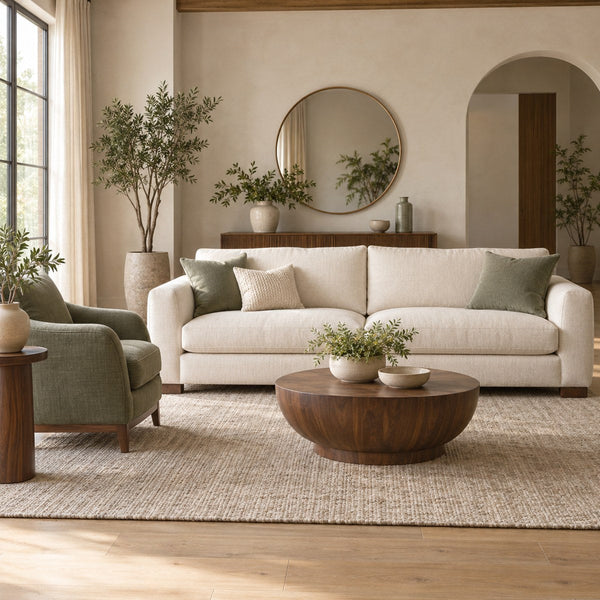
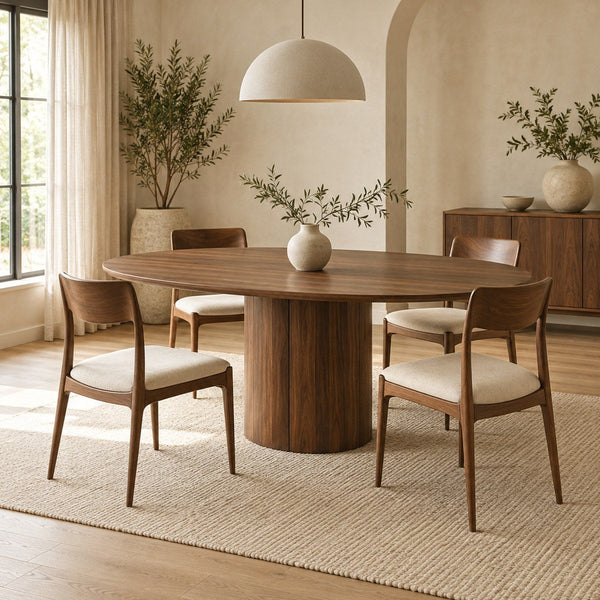
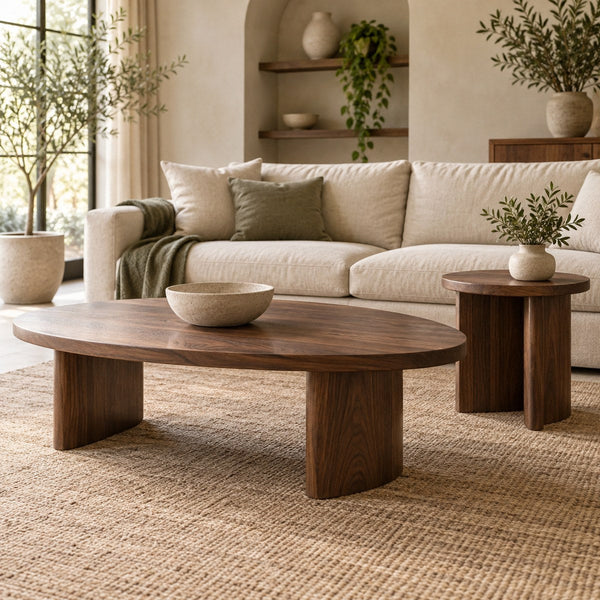


Almost everybody furnishes a room in the same order, and it is the wrong one.
The sofa comes first, because it is the biggest decision and the most exciting one. Then a coffee table to go with the sofa. Then, months later, a rug that has to work around both. Then a lamp, bought in a hurry because the room is dark. The result is a room built outward from one object, and it usually reads that way.
Start with the floor
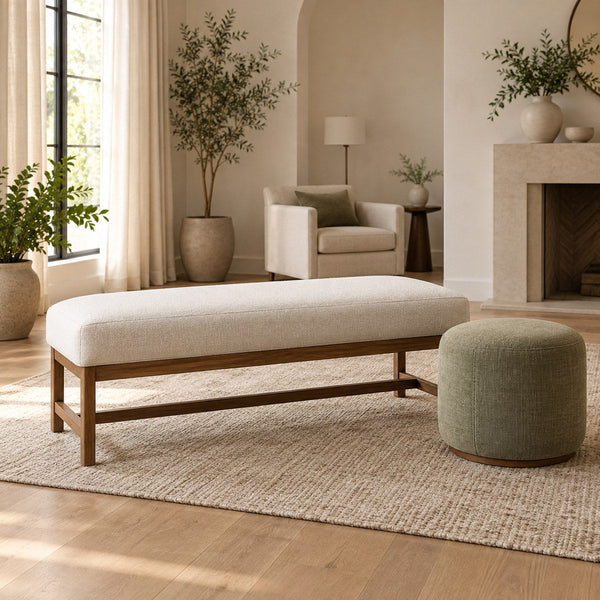
A rug sets the boundary of the room before anything is in it. Once the rug is down, the seating has nowhere to drift to — the front legs go on the rug, and the arrangement decides itself. Buying the rug last means buying a rug that has to apologise to the furniture.
Then the light
Rooms are lit badly by default. One ceiling fixture, dead centre, casting everything downward. Before you spend on a sofa, work out where the two or three pools of light in the room are going to be — a floor lamp beside the seat, something low on a side table, maybe a picture light.
A modest sofa in a well-lit room looks considered. An expensive sofa under a single ceiling bulb looks like furniture in a showroom after closing.
Then the big piece
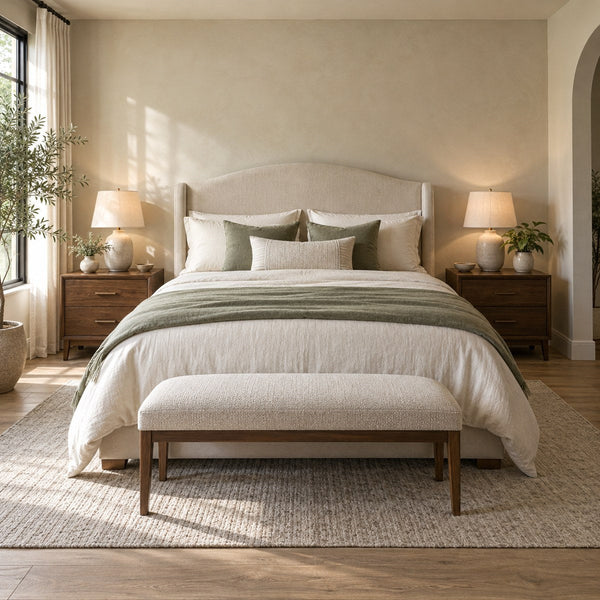
Now the sofa, or the bed, or the dining table. By this point you know how much floor the rug has claimed and where people will actually sit, so the size decision is arithmetic rather than hope.
Then storage, last
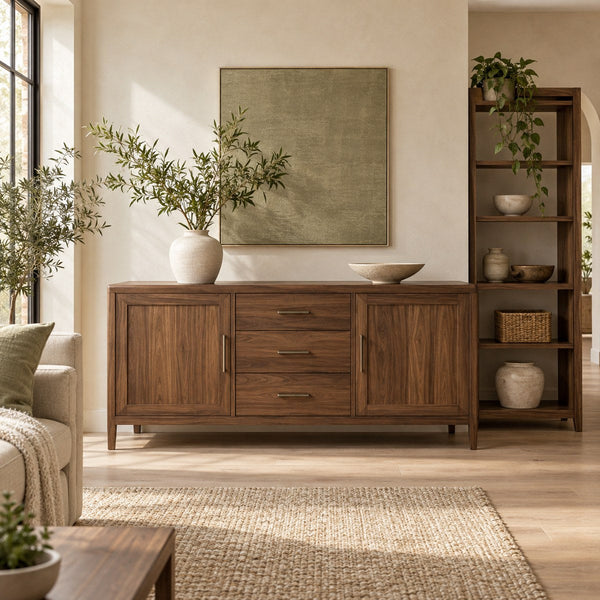
Bookcases and cabinets should be bought when you know what is going in them, which is only true after you have lived in the room for a while. Buying storage first means buying storage that fits the wall instead of the things.
The exception
If one piece is the reason for the room — an inherited table, a chair you have wanted for years — start there and build around it. That is not the same as starting with the sofa because the sofa is expensive.
Why we care
We sell all of it, so this is not advice that pushes you toward one shelf. Rooms that are put together in this order need fewer replacements, and people ask us for fewer returns. That suits everybody.